Ap11 P-I · Part #1. #11
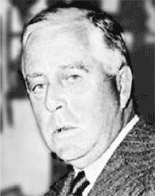
James Jeaans 1877-1946
The trail of the ghost is found in remarkable remarks of many of the physi cists and it can be said that Plank himself initiated this in 1931, when he said "Science can never solve the enigma of Nature, and this is because that in the final analyzes, we our selves are a part of the puzzle which we are trying to solve." This is still being echoed in numerous such remarks.
Right at the onset of the evolution of the discoveries of quantum mechanics, the British physicists Sir James Jeans quipped "The Universe begins to look more like a great thought than a machine." Later, Adolf Portman
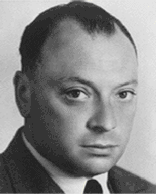
Wolfgang Pauli 1900-1958
commented on this; "It is now known that the natural sciences have arri-
ved at the borders of the physically knowable. They have had to acknowledge an infinite mystical domain behind all life." The temperamental 1945 exclusion principle Nobel laureate, Wolfgang Pauli, did not make
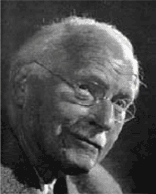
Carl Gustaf Jung 1875-1961
much fuss about this question but went to Zurich to see Carl Gustafs Jung in his search for an understanding of the connection between the observer and and the experiment. Later Pauli was quoted sayng "Behind reality there is an elevated and independent order which both the spirit of the observer, as well as the object of investigation, are subject to."
Ap12 P-I · Part #1. #12
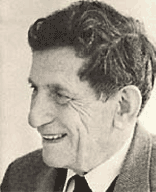
David Bohm 1917-1991
When Professor David Bohm later sought out Kristnamurti, then he was not the first physicist of The New Physics , who turned to those who investigate the spirit of Man. Their discourse ended up with Arthur Costlers old question. "What happened to humanity? Did we take a wrong turn somewhere on the way?" in the book THE ENDING OF TIME , turns out to be most interesting. The physicist Brandon Carter has pointed out; "According to the basic laws of physics, we have
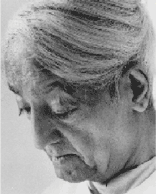
J. Krishnamurti 1895-1986
to include the characteristics of the instruments. Here, the observer, must be counted amon-
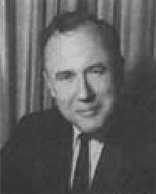
John A. Wheeler 1911-20??
gst the instruments." Here we must take care not to forget the grand old man of physics, Professor Emeritus, John Archibald Wheeler, who has emphasised the fact that quantum theory forces us to look inward by the comment "Nothing is more important about quantum physics than this: it has destroyed the concept of the world as 'sitting out there.' The universe will never afterwards be the same." These remarks are not new in the history of Man and have been heard at other times in history. Here we are reminded that 2400 years Protagoras pointed out that "Man is the measurer of all things." This is indeed the crux of the riddles of physics.
Ap13 P-I · Part #1. #13
In spit of many attempts at including the observer in the outcome of the experiments, this has not succeeded. There has not even been anything which could be classified as being close to some kind of success and Stephen Hawking says "Although we know the basic equations which bring together all of our biology, we have not been able to bring together any investigation of human behavior into the branch of applied mathematics." The physicist and Nobel laureate, Eugene Wigner, has claimed that "Man will never understand physical reality unless he takes into account the self reflecting properties of his consciousness."
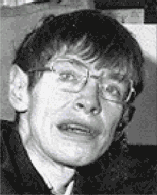
Stephen Hawking 1942-20??
Francis of Assisi had described these difficulties thus "Who is it that does the knowing? What we are seeking is that which is seeking." Bishop George Berkeley (1685-1753) is known for remarks of this nature.
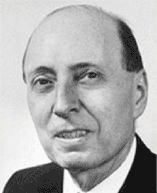
Eugine Wigner 1901-1995
In the seventies, some physicists presented a model of the Universe, The Holographic Paradigm, and for a time there was much to do about this model. This further lead to the first--in modern times--connections between the so called real sciences, that is physics and biology, and real believes, believes where Men say not just that
they believe, but that they know. Here the reference is to the spiritual sciences: Theosophy and the wisdom which Men gain in a changed state of consciousness that is now sometimes referred to as quantum changed. .
Ap14 P-I · Part #1. #14
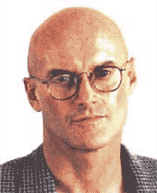
Ken Wilber 1949-20??
In 1978 Lawrence Beynam made the following claims "We are currently undergoing a paradigm shift in science--perhaps the greatest shift of its kind to date. It is for the first time that we have stumbled upon a comprehensive model for mystical experiences, which has the additional advantages of deriving from the forefront of contemporary physics."
Six years later, the grand commentator of mystical phenomena, Ken Wilber, wrote a brilliant critical appraisal of these ideas and called it PHYSICS, MYSTICISM AND THE NEW HOLOGRAPHIC PARADIGM.
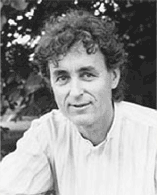
Fritjof Capra 1939-20??
In this it maybe said that he wiped out the hopes of those who saw before
them the marriage of mysticism and physics. In this article Wilber paraphrased Eckhart "If your God is the God of today's physics, then where ever that physics goes (tomorrow), that God goes with it." None the less,
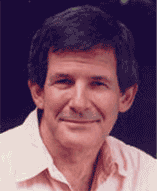
Gary Zukav 19??-20??
this model lead to some physicists beginning to see connections between their work and the philosophy behind Eastern Mysticism, and here soared the writings of Fritjof Capra THE TAO OF PHYSICS and Gary Zukav THE DANCING WU LI MASTERS . In his book Capra used the ideas of David Bohm "Quantum theory forces us to see the universe not as a collection of
Ap15 P-I · Part #1. #15
physical objects, but rather as a unified whole... All [physical] particles are dynamically composed of one another in a self consistent way, and in that sense can be said to 'contain' one another. In [this theory],"Quan-tum theory forces us to see the universe not as a collection of physical objects, but rather as a unified whole... All [physical] particles are dynamically composed of one another in a self consistent way, and in that sense can be said to 'contain' one another. In [this theory],the emphasis is on the interaction, or 'inter penetration,' of all particles."
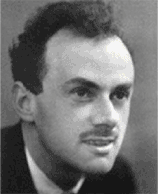
Paul A. M. Dirac 1902-1984
The Virtual Matter/Energy of the Vacuum
But there are more ghosts on the trail of the New Physics in the twentieth century, and here we should primarily name the so called mathematical renormalization technique which is used on the energy exchanges of the fermions (permanent matter particles). In the last years of the twenties, experimental physicists succeeded in seeing the energy exchanges of the electron. It was discovered that for this the electron exchanged the photon as a force carrier, or by sending and receiving a photon. As an aid in this the electron borrowed some virtual energy from the surrounding space.
REMARK: Virtual energy of space is something which one physicist, Karl von Weizecker, has dared to refer to as prana, or chi energy and at the same time claim that Man had access to this energy.
Ap16 P-I · Part #1. #16
When the physicists began to investigate the energy exchanges of the electron, it was discovered that the mathematics told them that it (the electron) was endowed with infinite energy while it was engaged in the exchange. This was of course an absurdity for the physicists and to solve this problem a mathematical renormalization process was created to whip this out. When the father of Quantum Electro Dynamics (QED) , the Nobel laureate Paul Dirac, heard about this, he sternly protested claiming that this meant that something was being swept under the rug. The causes were not investigated and the phenomena not explained. There are still doubts about this solution.
But what is all the search of the New Physics about? On the 13th of June 1988 NEWSWEEK presented an interview with Professor Stephen Hawking on the occasion of the publication of his book A BRIEF HISTORY OF TIME . In this interview he expressed his opinion that it will be possible to explain--in one mathematical equation--all that is observable in creation. That the solution would be in mathematics and that he was convinced that "God spoke that language." One of the prime components of this equation are the unification of general relativity and quantum mechanics, thereby the unification of the classical laws of physics/the mechanical laws, with the statistical/quantum mechanical laws.
It is some time since Men have begun the talk of one such recipe for the Universe--one general knowledge and wisdom. Our history has many accounts of such intellectual desires.
Ap17 P-I · Part #1. #17
After having had his famous cogito ergo sum , spiritual experience on the 10th of November 1619, Rene Descartes became enthusiastic about what he called the admirable scien- ific method. A sort of collective general method which would unify all of Man's knowledge into one general wisdom, one general unification theory. This took place at the same time when
Galileo was in his prime and the Second Age of Enlightenment in its birth
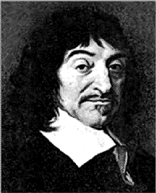
René Descartes 1595-1650
throes and the Dark Ages in growing retreat.
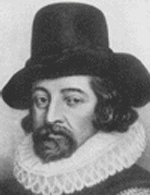
Francis Beacon 1561-1626
About this time, Sir Francis Bacon began to see the knowledge of Man as if it was structured like a pyramid with a specific top stone. The top stone alone, being as a pyramid and the pyramid not a pyramid without it. It may be said that the physical sciences--with theoretical physics at the forefront--have now been evolving in its search for this top stone during the 383
years elapsed since the renowned mystical experience of Descartes.
Sir Isaac Newton is for many the first prime witness in the search for The Recipe of the Universe . Newton may be described as being enraptured by the beauty and simplicity of his laws of gravity, and hoped that he would stumble on an all encompassing theory, even though he kept this secret, and that this would only be known after his death.
Ap18 P-I · Part #1. #18
Through this it may be said that Newton had laid the cornerstone to all the endeavor of modern physics: To show and prove the logical necessity of the Universe as we experience it.
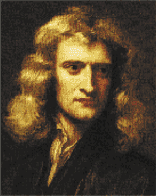
Isaac Newton 1642-1727
It is thus not the declarations of progress that are the struggle of physics, but the dream of Newton, which was, and which is, the goal of the foremost physicists. The guidepost to this goal, say the physicists, is to be found in the beauty of the equations. Beauty according to Shakespeare is something "In the eye of the observer." Beauty according to the physicist
is the "The logical invariance in Nature."
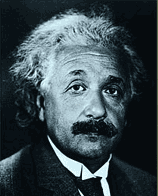
Albert Einstein 1879-1955
Einstein´s Search
Albert Einstein is here an example of a physicist who revolutionizes physics, only by following his sense of aesthetics. When Einstein began, he found two shining theories: Maxwell's Theory of Electro-magnetism and the Gravitational Theory of Newton. Nothing indicated that these theories might be erroneous--only a small aesthetic discrepancy: -- They did not fit together. Maxwell's equations did not permit anything traveling between
places faster than the speed of light, on the other hand, the gravitation of Newton distributed
Ap19 P-I · Part #1. #19
itself over cosmic distances with an infinite speed. Einstein's cure for this malady was a new theory of gravity, relativity--which is, to this day, no doubt the most beautiful of all science theories. Smitten by this beauty, also Einstein, like Newton, fell for the desire after the last theory of the complete unification of the Laws of Nature. He dedicated the rest of his life to this endeavor; To melt together into one theoretical structure, Gravity and Electromagnetism, in the form of something which has been called the Unified Field Equation .
Einstein eventually made a suggestion for this equation and called it the Universal Constant . The suggestion turned out to be unfounded and Einstein said to have regretted much this attempt. When the efforts of Einstein proved useless, the hope for the realization of this dream faded with new discoveries. In stead of unifying the two known force (Electromagnetism and Gravity), the progression of physics forced the physicists into the micro universe of the atom and added to it two new forces: The so called Weak-Interactions (Weak Nuclear Force) and the Strong Interactions (Strong Nuclear Force). Not only the forces, but the particles them selves, refused to bow to some simple rules and the physicists began to drown in a flood of new basic particles: If the world of the physicist had began in the twenties with only two matter particles, that is the proton and the electron, now Man--in the fifties--got lost in an ever more incomprehensible collection of particles. The term Particle Zoo was coned with ower two hundred fundamental particles being discovered by the experimental physicists by their ever-bigger accelerators.
Ap20 P-I · Part #1. #20
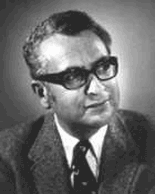
Murray Gell-Mann 1929-20??
Grand Unifyed Theories
It was first towards the end of the seventies that a row of magnificent discoveries, recreated the old deem: The American physicist Murry Gell-Mann, made predictions of the inner construction of the nucleons; the quarks. With the help of these fraction fractions of atoms, mathematically defined in the so called Quantum Chromo Dynamics (QCD) , it became possible to classify all the particles into three families.
Success in reaching another goal was registered, but any future Recipe for the Universe will depend on this: This was the unification of the Weak and Electromagnetic Energy exchanges into what now is known as the
Electro-Weak-Force --a unification which at the same time will be a kind of ancestor to any future Grand Unified Theory of three of the four forces--EMF+WNF+SNF--(wich may possibly not be possible) and is today, along with Quantum Chromo Dynamics , the backbone in the Standard Model, as the physicist now call the present theoretical constructions of the physical Universe. No other theories have enjoyed such general acclaim. Every time which new discoveries come from the accelerators, then they fit perfectly into the puzzle of the complexed picture of the Material Universe in the Standard Model. The latest trend in theorization, since the beginning of the eighties, is the addition of two new routs The String Theories and The Super Symmetry Theories . The fourth then is a combination of these two, or what is now called Superstring Theories, which is leading to theories with the grand title of Theory of Everything .