Ap81 P-3 · Part #3. #81
Not only the questions as to why we have these faculties (What is it in Nature that requires us to have them?) and what their normal functions might be, but the fact that malfunctioning, they produce the numerous attacks that malfunctioning brains have to suffer. They are further the faculties for the creative abilities in healthy brains, of hallucinations in sick ones. They produce either creative geniuses or demented idiots. Some claim that they have a special function during the process of dying, producing extremely strong endorphins known as dynorphin (The motin picture: Flatliners) The QF-theory claims to have the ultimate answers to these faculties, otherwise it would not be a Theory of Everything .
If we do discover a complete theory, it should in time be understandable in broad principle by everyone, not just a few scientists. Then we shall all, philosophers, scientists, and just ordinary people, be able to take part in the discussion of why it is that we and the universe exist. If we find the answer to that, it would be the ultimate triumph of human reasonfor then we would truly know the mind of God."
Stephen W. Hawking
Mystical Experiences of the Worlds Great Physicists
The worlds physicists have the mysterious Jamais vu and Déjà vu faculties in their heads, just like we ordinary mortals. Consequently the worlds great physicists have also experienced
Ap82 P-3 · Part #3. #82
spiritual experiences , about which the brilliant spiritual subjects commentator and writer, Ken Wilber, published the first--known to the author--collection of tales of such experiences. This was QUANTUM QUESTIONS , published in 1985 by Shambala. The book presented the mystical experiences of: Heisenberg, Schrödinger, Einstein, De Broglie, Jeans, Palnck, Pauli and Eddington. Here comes to mind the utter inability to investigate thought , which reminds us of Eddingtons comment on the Uncertainty Principle he described as: Something unknown is
doing we dont know what.
The next such publication would be by the brilliant Professor Paul C. W. Davis (University of Adelaide), a leading authority on the progression of the cutting edge of theoretical physics. He has written at least 7 textbooks on the New Physics (Quantum Mechanics), and at least 12 books popularizing the science subjects pertaining to the leading edge of our sciences. A late book of his draws its title from the Stephen Hawking quotations on this page. This is: THE MIND OF GOD . This marvelous book was first published in 1992 (ISBN 0-671-79718-2), and it may be considered to sum up the current situation of Mans
Ap83 P-3 · Part #3. #83

Paul C. W. Davis 1946-20??
endeavor at finding a formula for the Universe. His hopes are for a final theory, a dream of a Theory of Everything . It is the last chapter in Professor Davises book, which has captured the authors entire attention, this since it contains suggestions and projections for the eventual rout to this goal of Man. The title of this chapter is THE MYSTERY AT THE END OF THE UNIVERSE .
In this final chapter--the 9th--the Professor comes to the conclusion that it will be through a mystical spiritual experience that Man will achieve this final goal. To the author of The Little Scroll , this is such a profound conclusion that he has decided to incorporate the whole of this chapter, here in this file, on the occasion of the completion of his book. Unfortunately, the author of these Files has not yet been able to
get the address (including e-mail) of Professor Davis. Neither find the proper authority to apply for permission for a reproduction of this chapter that follows here in these pages, but efforts at finding the applicable person (s) are being continued. The presentation is thus a non-profit endeavor and appears solely as support for the authors arguments regarding the method for the discovery of the final truths in science. The presentation here should serve as an advertisement for this marvelous book of Professor Paul Davies. On the next pages we include this remarkabel insight from THE MIND OF GOD , which matches the authors experience:
Ap84 P-3 · Part #3. #84
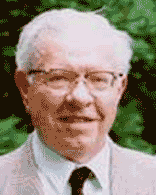
Fred Hoyle 1915-2001
THE ESSENCE of this book (THE MIND OF GOD) has been to trace the logic of scientific rationality back as far as it will go
in the search for ultimate answers to the mystery of existence. The idea that there might be a complete explanation for everything--so that all of physical and metaphysical existence would form a closed explanatory system--is a tantalizing one. But what confidence can we have that the goal of this quest is not just a chimera?
Ap85 P-3 · Part #3. #85
In his famous book A Brief History of Time Stephen Hawking begins by recounting a story about a woman who interrupts a lecture on the universe to proclaim that she knows better. The world, she declares, is really a flat plate resting on the back of a giant turtle. When asked by the lecturer what the turtle rests on, she replied, "It's turtles all the way down!" The story symbolizes the essential problem that faces all who search for ultimate answers to the mystery of physical existence. We would like to explain the world in terms of something more fundamental, perhaps a set of causes, which in turn rest upon some laws or physical principles, but then we seek some explanation for this more fundamental level too, and so on. Where can such a chain of reasoning end? It is hard to be satisfied with an infinite regress. "No tower of turtles!" proclaims John Wheeler. "No structure, no plan or organization, no framework or ideas under laid by another structure or level of ideas, under laid by yet another level, and yet another, ad infinitum, down to bottomlessblackness." What is the alternative? Is there a "superturtle" that stands at the base of the tower, itself unsupported? Can this superturtle somehow "support itself"? Such a belief has a long history. We have seen how the philosopher Spinoza argued that the world could not have been otherwise, that God had no choice. Spinoza's universe is supported by the superturtle of pure logical necessity. Even those who believe in the contingency of the world often appeal to the same reasoning, by arguing that the world is explained by God, and that God is
Ap86 P-3 · Part #3. #86
logically necessary. In chapter 7 I reviewed the problems that accompany these attempts to explain contingency in terms of necessity. The problems are no less severe for those who would abolish God and argue for some Theory of Everything that will explain the universe and will also be unique on the grounds of logical necessity. It may seem as if the only alternatives are an infinite tower of turtles or the existence of an ultimate superturtle, the explanation for which lies within itself. But there is a third possibility: a closed loop. There is a delightful little book called Vicious Circles and Infinity which features a photograph of a ring of people (rather than turtles) each sitting on the lap of the person behind, and in turn supporting the one in front. This closed loop of mutual support symbolizes John Wheeler's conception of the universe. "Physics gives rise to observer-participancy; observer-participancy gives rise to information; information gives rise to physics. " This rather cryptic statement is rooted in the ideas of quantum physics, where the observer and the observed world are closely interwoven: hence "observer-participancy." Wheeler's interpretation of quantum mechanics is that it is only through acts of observation that the physical reality of the world becomes actualized; yet this same physical world generates the observers that are responsible for concretizing its existence. Furthermore, this concretization extends even to the laws of physics themselves, for Wheeler rejects completely the notion of eternal laws: "The laws of physics cannot have existed from everlasting to everlasting. They must have come into being at the big bang." So,
Ap87 P-3 · Part #3. #87
rather than appeal to timeless transcendent laws to bring the universe into being, Wheeler prefers the image of a "self-excited circuit," wherein the physical universe bootstraps itself into existence, laws and all. Neat though such "loopy" systems may be, they inevitably fall short of a complete explanation of things, for one can still ask "Why that loop?" or even "Why does any loop exist at all?" Even a closed loop of mutually-supportive turtles invites the question "Why turtles?" All three of the above arrangements are founded on the assumption of human rationality: that it is legitimate to seek "explanations" for things, and that we truly understand something only when it is "explained." Yet it has to be admitted that our concept of rational explanation probably derives from our observations of the world and our evolutionary inheritance. Is it clear that this provides adequate guidance when we are tangling with ultimate questions? Might it not be the case that the reason for existence has no explanation in the usual sense? This does not mean that the universe is absurd or meaningless, only that an understanding of its existence and properties lies outside the usual categories of rational human thought. We have seen how application of human reasoning in its most refined and formalized sense--to mathematics--is nevertheless full of paradox and uncertainty. Gödel's theorem warns us that the axiomatic method of making logical deductions from given assumptions cannot in general provide a system which is both provably complete and consistent. There
Ap88 P-3 · Part #3. #88
will always be truth that lies beyond, that cannot be reached from a finite collection of axioms. The search for a closed logical scheme that provides a complete and self consistent explanation for everything is doomed to failure. Like Chaitin's cabalistic number, such a thing may exist "out there" abstractly--indeed, its existence could be known to us, and we might get to know bits of it--but we cannot know its whole form on the basis of rational thought.

Ap89 P-3 · Part #3. #89
It seems to me that, as long as we insist on identifying "understanding" with "rational explanation" of the sort familiar in science, we will inevitably end up with turtle trouble: either an infinite regress, or a mysterious self-explaining superturtle, or an unexplained ring of turtles. There will always be mystery at the end of the universe. It may be, however, that there are other forms of understanding which will satisfy the inquiring mind. Can we make sense of the universe without turtle trouble? Is there a route to knowledge--even "ultimate knowledge"--that lies outside the road of rational scientific inquiry and logical reasoning? Many people claim there is. It is called mysticism.
Most scientists have a deep mistrust of mysticism. This is not surprising, as mystical thought lies at the opposite extreme to rational thought, which is the basis of the scientific method. Also, mysticism tends to be confused with the occult, the paranormal, and other fringe beliefs. In fact, many of the world's finest thinkers, including some notable scientists such as Einstein, Pauli, Schrödinger, Heisenberg, Eddington, and Jeans, have also espoused mysticism. My own feeling is that the scientific method should be pursued as far as it possibly can. Mysticism is no substitute for scientific inquiry and logical reasoning so long as this approach can be consistently applied. It is only in dealing with ultimate questions that science and logic may fail us. I am not saying that science and logic are likely to provide
Ap90 P-3 · Part #3. #90
the wrong answers, but they may be incapable of addressing the sort of "why" (as opposed to "how") questions we want to ask.
The expression "mystical experience" is often used by religious people, or those who practice meditation. These experiences, which are undoubtedly real enough for the person who experiences them, are said to be hard to convey in words. Mystics frequently speak of an overwhelming sense of being at one with the universe or with God, of glimpsing a holistic vision of reality, or of being in the presence of a powerful and loving influence. Most important, mystics claim that they can grasp ultimate reality in a single experience, in contrast to the long and tortuous deductive sequence (petering out in turtle trouble) of the logical-scientific method of inquiry. Sometimes the mystical path seems to involve little more than an inner sense of peace--"a compassionate, joyful stillness that lies beyond the activity of busy minds" was the way a physicist colleague once described it to me. Einstein spoke of a "cosmic religious feeling" that inspired his reflections on the order and harmony of nature. Some scientists, most notably the physicists Brian Josephson and David Bohm, believe that regular mystical insights achieved by quiet meditative practices can be a useful guide in the formulation of scientific theories.
In other cases mystical experiences seem to be more direct and revelatory. Russell Stannard writes of the impression of facing an overpowering force of some kind, "of a nature to com-